
 English
 لالعربية
 Español
 Русский
 Português
 Français
 Deutsch
 Türkçe
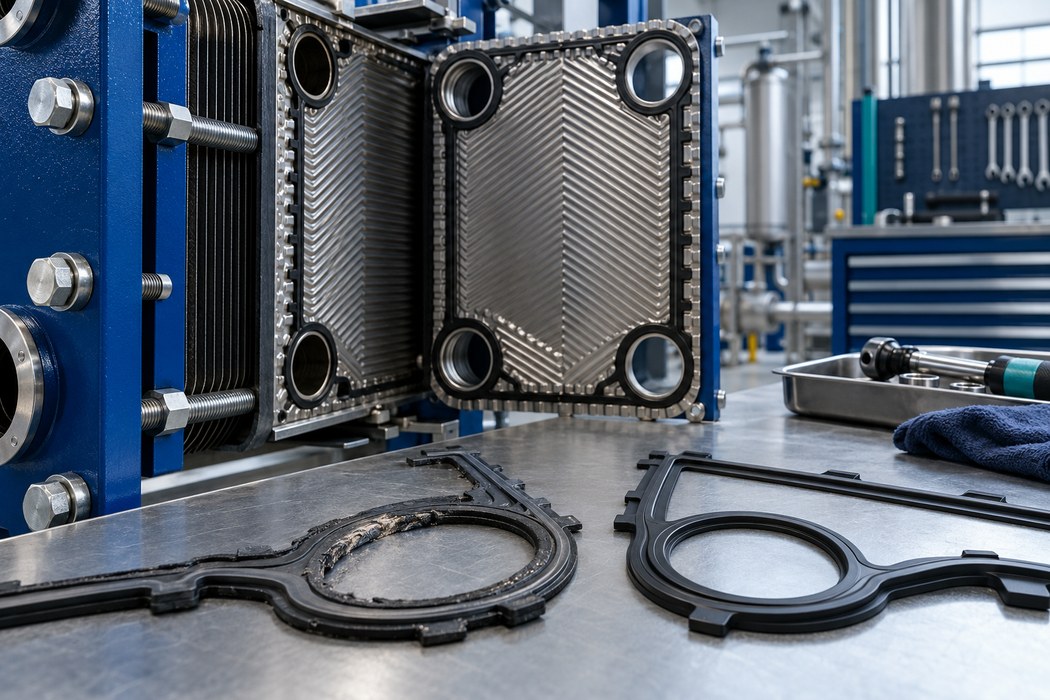
Understanding Common Causes of Leakage and Gasket Replacement Needs
Plate heat exchangers are widely used because of their compact structure and efficient heat transfer performance. However, during long-term operation, gasket-related issues may affect equipment reliability and increase maintenance requirements.
Understanding why gaskets fail can help equipment users improve maintenance planning and reduce unexpected downtime.
Common Causes of Plate Heat Exchanger Gasket Failure
Natural Aging
Over time, gasket materials may gradually lose elasticity due to continuous exposure to operating conditions.
Signs may include:
Hardening
Loss of flexibility
Reduced sealing performance
Incorrect Material Selection
Different applications require different gasket materials.
For example, a gasket suitable for water applications may not perform well when exposed to certain oils, chemicals, or higher temperatures.
Material compatibility is one of the most important factors affecting gasket service life.
Improper Installation
Installation quality can directly influence sealing performance.
Common installation-related problems include:
Incorrect gasket positioning
Uneven compression
Excessive tightening force
Proper installation procedures help maintain reliable sealing.
Operating Conditions Beyond Design Requirements
Unexpected temperature increases, pressure fluctuations, or chemical changes can accelerate gasket degradation.
How to Improve Gasket Service Life
To improve gasket performance, users should consider:
Selecting suitable gasket materials
Following correct installation procedures
Regularly checking equipment conditions
Replacing aging gaskets when necessary
Conclusion
A gasket is a small but critical component in a plate heat exchanger system.
By understanding common failure causes and choosing suitable replacement solutions, equipment users can improve operational stability and reduce maintenance challenges.